May 10, 2013

Brown v. Canada: Court Puts Brakes on Aboriginal Class Action

For close to twenty years I have had the privilege of representing Nora Bernard and the survivors of the Shubenacadie Indian Residential School. I was a member of the steering committee that negotiated the landmark National Indian Residential Schools Class Action settlement and I have had the great honour of helping hundreds of former residential school students in the claims process.

The Residential Schools Class action was the largest class action settlement in Canada, effecting nearly 70,000 aboriginal people across Canada. but even that massive court case hasn't addressed all of the harms that aboriginal people have suffered as a result of actions of various federal and provincial government actions.

So I have followed with great interest the various claims that have been filed on behalf of aboriginal people across Canada based on issues similar to the loss of language and culture arguments that we pursued in the National Residential School claims.

Case in point: Brown v. Canada a class action in Ontario that was filed as a result of incidents that took place between 1965 and 1984.

The class action alleges that, in a program similar to the cultural assimilation policies of the Indian Residential Schools, the Canadian government took Aboriginal children from their families and placed them with non-Aboriginal families. The pleadings claim the government was engaged in a process of “identity genocide”.

Under the Child Welfare Act, Ontario assumed responsibility for providing child welfare services for the children.

The Plaintiffs allege that during the 19 years, approximately 16,000 Aboriginal children were removed from their families and lost contact with their Aboriginal cultural identity. They claim they lost their language, culture, customs and heritage, and any benefits they might have as status Indians under the Indian Act. (Para. 4 of Brown v. Canada [2013] ONCA 18).

No Cause of Action...but Certified Anyway

The case management judge, Perell J., certified the class action under the Class Proceedings Act. While he did not find a valid cause of action in the pleadings, the case management judge certified the claim on the condition that the plaintiffs amend their statement of claim. The case management judge listed the cause of action as the Crown’s breach of a fiduciary or common law duty to prevent the Aboriginal child from losing his or her Aboriginal identity.

Canada appealed the decision of Perell J. to the Divisional Court: Brown v. Canada (Attorney General), [2011] ONCA 1193. The Divisional Court found that the pleadings should have been amended instead of the case management judge granting the certification. Accordingly, the statement of claim was struck.

The claim then came to the Ontario Court of Appeal to determine whether it was open to the case management judge to certify the class proceeding before amending the pleadings. The Court of Appeal agreed with the Divisional Court that Perell J. erred in certifying the claim without having pleadings that disclosed an appropriate cause of action:

[44] I agree with the Divisional Court that the case management judge erred in conditionally certifying the class proceeding in the absence of a statement of claim that disclosed a cause of action. As this case demonstrates, identification of a cause of action is fundamental. It is impossible for the defendant to meaningfully respond to an application for certification without knowing the cause of action. The definition of the class and the identification of the common issues depend upon the nature of the cause of action.

Accordingly, the appeal was dismissed.

Starting over

It is back to the starting line for the Class Members. They must amend their pleadings to show a cause of action and then start again with a different case management judge.

May 9, 2013

Are Pedophiles born that way?

As a sexual abuse claims lawyer I have learned more than I want to about the deviancies that cause adults to prey on children. New research coming out of the University of Toronto suggests that Pedophilia may be the result of predisposed brain deficiencies, meaning they were born ‘wired’ that way.

Disconnection

As this video explains, for two years, researchers scanned the brains of pedophilic men using Functional MRI machines. The researchers discovered that, when compared to other men, pedophilic men had significantly less tissue in two regions of the brain. These tissue areas are responsible for connecting other brain regions. The researchers conclude:

This suggests the possibility that sexual attraction to children versus adults is not caused by some difference in any one region of the brain, but in the way that multiple regions work together. Neuroscientists refer to this as a partial “disconnection syndrome.”

Interestingly, the researchers also discovered that pedophiles do not have any differences in the regions of the brain that regulate self-control or impulsivity.

Nature vs nurture?
.
But what about the idea that people’s upbringing and experiences shape the way they turn out? While some researchers and scientists believe that people may be predisposed to pedophilia, many psychologists and sexologists believe that pedophilia is a result of one’s life experiences.

One of the general theories is that our sexuality matures as we age, and that people who are pedophiles have suffered some events in their childhood which have stunted the evolution of their sexuality.

In a previous article I asked the question: “Does the Catholic Church attract sexual abusers… or create them?” Dr. Richard Cravatts offers a theory that is very similar to the popular ‘nurture’ theory. He says “the process of accepting celibacy and entering the priesthood at an emotionally immature age level predispose priests to conflicting notions about human sexuality…”

Camouflage?

Another theory is that the Church (and other positions of authority) tends to attract those who were already predisposed to pedophilia. The institutional structure of the Catholic Church provides an opportunity for those with pedophilic tendencies to attract, groom, manipulate and abuse their victims (as was noted by the Supreme Court of Canada in Doe v. Bennett).

The research continues...

There is no definitive answer just yet as to what causes pedophilia. The hope is we can eventually identify individuals who are likely to offend and apply corrective therapy to prevent any harm.

James Cantor, the researcher from the University of Toronto, believes that the technology already exists for creating such a diagnostic test. He is confident that we will see some promising developments in the next few years.

Let me know what you think by leaving a comment below.

May 1, 2013

N.S. Colored Home Settles Abuse Class Action: But no apology

Proposed Settlement in Class Action

The Chronicle Herald reported last week that a class action launched by former residents of the Nova Scotia Home for Colored Children has been settled for $5,000,000.

According to the media reports, there are about 140 former residents participating in the class action. The residents’ claim against the Province of Nova Scotia has not been settled, and it is still making its way through the Courts.

I know that resolving this claim is likely to provide a great deal of relief, and closure, to the class members. One of the class members, Troy Smith was quoted as saying the group's financial demands were higher but they decided to settle for less because they didn't want to force the sale of the Home's property:

“We could have easily gone after the land and the value of the land, and we took the high road, because we do know that the home itself has historical significance to some people in the community,” said Smith.

I give credit to Mr. Smith and the other class members for the approach they took in trying to resolve the claim.

No apology

One issue regarding the settlement with the Colored Home that caught my attention was the fact that it does not include an apology. Counsel for the class members indicated that when they looked at the wording of the proposed apology, they felt it was insufficiently sincere so they decided to proceed with the settlement in the absence of the formal apology.

One of the class members said "a half-hearted apology was worse than none at all".

I have to say, I agree.

Apologies have value

There is no doubt that apologies given as part of litigation, or to resolve litigation, can have significant value to claimants.

In a presentation I gave to the Canadian Institute’s National Conference on Institutional Abuse titled Safe to Say You’re Sorry: The Psychology of Apology, I reviewed research that proves apologies can have the effect of reducing litigation and increasing satisfaction on the part of plaintiffs with respect to the results of the litigation.

Class counsel for the former residents of the Home for Colored Children said that they decided to proceed without an apology because they did not think the proposed terms of the apology were sincere. There is no doubt that the sincerity of an apology (or lack thereof) is an important fact whether an apology will actually be of value to resulting litigation.

National Residential School Settlement

I had the honour of representing Nora Bernard and the former residents of the Shubenacadie Indian Residential School. I also participated in the negotiations that led to the landmark National Indian Residential Schools class action settlement. That process remains the largest abuse compensation settlement anywhere in the world.

Apology by National Leaders

A critical part of the class action settlement was the formal apology that was given to residential survivors on behalf of the Canadian government and all of the churches involved. I vividly remember watching the televised event where the Prime Minister of Canada and all of the leaders of the opposition parties, and the heads of all of the churches that signed the agreement offered their formal apologies to the residential school survivors.

The apologies were, in my view, sincere and heartfelt, and watching the faces of the residential school survivors in the room with me, I could tell that, for many of them, this was the most important part of the claims resolution process.

Individual Apologies to Survivors

Furthermore, any survivor that proceeds through an individual compensation hearing has the opportunity to receive a formal apology from a representative of Canada, as well as receiving a written apology signed by the Prime Minister of Canada. I know many of my clients have framed their copy of the apology.

Conclusion, but not an end...

I am pleased that any of the former residents of the Home for Colored Children who suffered abuse will, finally, have an opportunity to receive some measure of compensation. I commend the class members and their dedicated legal counsel.

However, as I have told all of my historical abuse clients for the past 23 years, no amount of money is ever going to make them forget or erase what happened. Financial compensation is simply a measure of recognition that the abuse was wrong.

For most of my clients, a legitimate and heartfelt apology is more important than the number of zeros on any compensation cheque.

Continue reading "N.S. Colored Home Settles Abuse Class Action: But no apology " »

April 19, 2013

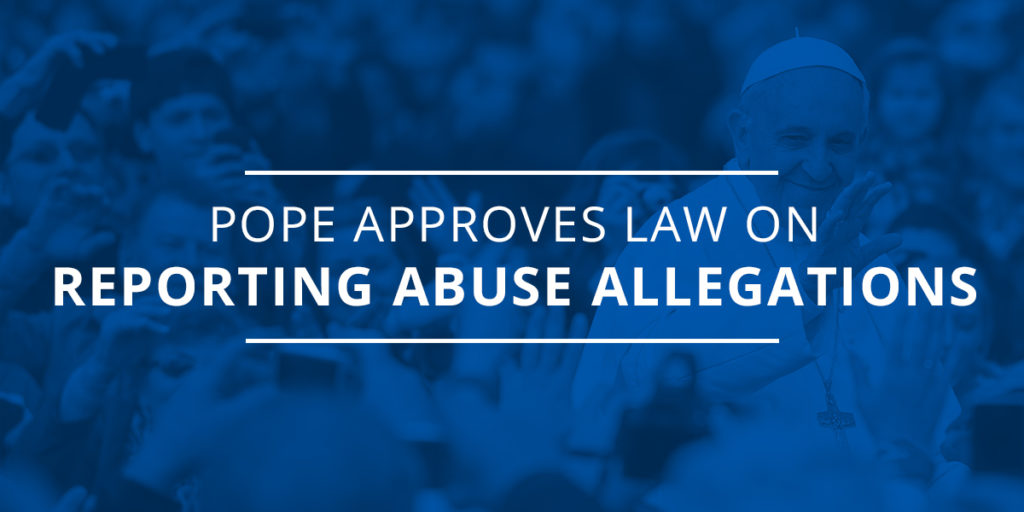
How Will Pope Francis Respond to the Catholic Sexual Abuse Crisis?

Newly ordained Pope Francis has certainly started his papacy by making the headlines. He turned down the luxurious Papal housing in the Apostolic Palace in favour of a simple hotel room, he travelled to a juvenile detention centre to wash the feet of the inmates, and he has issued what is seen as a strong statement against sex abusers in the clergy.

Pope Francis, the head of 1.2 billion followers of the Roman Catholic faith, called on the Church to act against clergy sex abuse. He demanded that the Bishops’ conferences around the world need to step up to disciplining the priests and assisting the victims. USA Today reports, :

“This could be an indication that he will move from a strongly centralized government of the church of 1.2 billion people to one that places increased authority locally.”

Right direction?

A strong statement by the Pope, yes, but is it a sign that the Church is moving in the right direction?

I think it might actually be problematic.

In my view, decentralization of authority is one of the factors that allowed the abuse crisis to happen in the first place. Bishops were moving abusive priests around like checkers on a checkerboard and no one was holding the Bishops responsible for their actions.

One of the main players involved in the scandal is the ex-Archbishop of Boston, Cardinal Bernard Law. Cardinal Law, who now lives in Rome, covered up hundreds of incidents of sexual abuse within his Archdiocese in Boston.

Law has indicated that his practice was to refer the priests to psychiatrists and therapists before re-assessment as to whether to return them to practice. It is exactly this kind of decentralized mismanagement that allowed the thousands of abuse cases around the world to take place!

As a sign of how attuned Francis is to the problem the Church faces regarding sexual abuse, one of the first Cardinals the new Pope met with following his election was Cardinal Law. Abuse victims described the Pope’s actions as “rubbing salt into still festering wounds”.

Cardinals Council

Last week the Vatican announce Pope Francis has named a council of 8 cardinals to provide him with advice on reform of the Church. The National Catholic Reporter called it a “signal that major reform may be on the horizon”

I’m not so sure; at least not when it comes to responding to the demands of catholic priest sexual abuse victims around the world.

It took me less than 15 minutes to find statements attributed to 4 of the 8 Cardinals relevant to sexual abuse by priests.

Two of the Cardinals don't appear to understand the magnitude of the problem.

Óscar Andrés Rodríguez Maradiaga of Honduras

In a May 2002 interview, when he was Cardinal of Honduras, Maradiaga claimed Jews influenced the media to exploit the Catholic priest sexual abuse crisis in order to divert attention from the Israeli-Palestinian conflict.

Cardinal George Pell of Australia

Australian media have noted Pell's "controversial" views on the catholic sexual abuse crisis. Quoting Pell as saying:


"...priest paedophilia and sex abuse scandals are not the greatest issue facing his church."

On the other hand, two of the candidates have made some hopeful statements and have taken steps to address allegations of priest abuse.

Francisco Javier Cardinal Errázuriz Ossa of Chile

In July 2010 Cardinal Francisco Javier Errázuriz, then Archbishop of Santigao asked the Vatican to rule on allegations of sexual abuse against a prominent Chilean priest accused of sexually abusing several teenagers.

Sean Patrick O’Malley of Boston

According to Wikipedia O'Malley has settled more than 100 sexual abuse claims against priests and has a zero-tolerance policy against sexual abuse. The National Catholic Reporter quoted him as saying:

"Quite often, the victims who want to see the bishop are the ones looking for a path to reconnect with God [and] with their faith. Not all of them, but a lot of them are looking for closure. In many cases, when a victim asks to see the bishop, it's because they're looking for a path home."

So what should be done?

The Pope should have issued specific instructions to Bishops to report all abuse allegations to police and to disclose records of all priests disciplined for sexual abuse to child protection authorities.

A problem with the Catholic Church’s approach to the sexual abuse scandal is that they continue to protect the priests and deal with the issue internally. Once an allegation comes to light the Church should immediately involve the relevant authorities.

It appears that at least 2 of the 8 Cardinals tapped to provide advice to Pope Francis have a more enlightened view of the proper response to allegations of priest sexual abuse. It remains to be seen what views the other members of the commission take and whether Francis follows the commissions advice.

What do you think? How should Pope Francis handle the clerical sexual abuse crisis?

April 6, 2013

Is solitary confinement a form of institutional abuse?

Can you go a whole day without any human interaction at all? What about a week? How about four years?

Canada a leader in solitary confinement?

A recent article in the Globe and Mail caught my attention. Unlike the trend in other countries, the controversial use of solitary confinement in Canadian prisons is increasing. The number of prisoners sent to solitary last year was approximately 8,600 – up from 8,000 in 2010.

Mr. Ivan Zinger, executive director of the Office of the Correction Investigator (OCI), says he is particularly concerned that mentally ill prisoners end up spending more time in solitary rather than receiving the treatment they require. Mr. Zinger is advocating for an independent panel that would assess whether individual inmates in solitary were justifiably placed there.

This is not the first time that Corrections Canada’s overuse of solitary confinement has been criticised. The Canadian Civil Liberties Association called for a government response to the issue in 2009.

Ashley Smith inquiry

I have previously drawn attention to the horrific treatment received by Ashley Smith who committed suicide after being subjected to extended periods of solitary confinement.

Ashley was jailed at the age of 14 for throwing crab apples at a mailman. She was put into solitary confinement early into her sentence and she remained there for almost four years! Her confinement only ended because she committed suicide while her guards watched.

The inquest into Ashley’s death is still ongoing.

Dr. Stuart Grassian, a Psychiatrist and Professor at Harvard’s School of Medicine, is a world renowed expert on the psychological effects of isolation. The very first line of his paper Psychiatric Effects of Solitary Confinement in the Journal of Law and Policy states:

“Solitary confinement – that is the confinement of a prisoner alone in a cell for all, or nearly all, of the day with minimal environmental stimulation and minimal opportunity for social interaction – can cause severe psychiatric harm.”

Dr. Grassian goes on to state that, in his observations, those prisoners with pre-existing mental illnesses who were housed in solitary experienced the exacerbation of their mental illnesses. Essentially the mentally ill, who were most likely to be placed into solitary, would suffer the most from isolation.

Moving forward

It has long been recognized that solitary confinement can have disastrous effects on the mental health of prisoners. It has been described as “long term torture”. The argument for solitary confinement is that it is an effective tool for disciplining inmates. But is it?

If one of the main purposes of the penal system is rehabilitation, and the effects of solitary confinement can wreak havoc on the mental health of prisoners, then the use of isolation as discipline really creates a system where prisoners end up becoming more dangerous to others and themselves.

Since the 90’s England has recognized the dangers and ineffectiveness of solitary confinement and has drastically cut back their use of isolation in prisons. In fact, according to an article in the New Yorker, there are fewer prisoners in isolation in England than there are in the State of Maine.

Feedback

What do you think? Is it time for Canada to re-think the use of solitary confinement? Do you think a panel such as the one suggested by Mr. Zinger would be helpful? Let me know by leaving a comment below.

February 27, 2013

Breaking the Silence

Mea Maxima Culpa: Silence in the House of God

For those of you that have not seen the "Explosive” Documentary About Sexual Abuse at a School for the Deaf CBC is now showing the documentary Mea Maxima Culpa online.

Given the widespread media attention given to priest sexual abuse scandals around the globe I am concerned that the public is becoming desensitized to the issue.

That's why I think it's important that everyone watch this documentary to understand the lengths to which the catholic church has gone to protect sexually deviant priests and to protect the reputation of the church.

200 Abused Children Over 20 years

The film focuses in particular on the Lawrence Murphy case. It is believed that Murphy molested approximately 200 deaf boys between 1950 and 1974. Even after many of the victims reported the abuse, the Vatican did not even defrock Murphy. It was not until 20 years after the allegations were first raised that a Cardinal requested a canonical trial against Murphy. The trial was eventually dropped against Murphy due to his poor health. Murphy died in 1998 never having answered for any of the allegations against him.

Other Notorious Priest Abuse Cover-Ups

The film also looks at several other notorious cases of abuse and cover-ups in the Catholic Church, specifically those of Tony Walsh and Marcial Maciel.

Maciel was a Mexican priest who founded the Legion of Christ, a Roman Catholic institute that has tens of thousands of youth members. In the 90s allegations came to light that Maciel had been abusing young boys since the 40s and 50s. He is alleged to have fathered 3 children with 2 different women.

Formal complaints about Maciel to the Vatican were reportedly shelved by the Congregation of the Doctrine of the Faith – a group headed by the future Pope Benedict. Pope Benedict later re-opened the investigation and in 2006 Maciel was finally “disciplined” – he was asked to live “a reserved life of penitence and prayer” and to no longer practice as a priest. He was transferred to a house in Florida, where he lived until his death in 2008. No canonical trial was commenced against Maciel.

The program is available online until April 2 so watch it while you have the chance.

February 20, 2013

Sex Abuse Charges Against Ontario Priest More of the Same

A retired Roman Catholic priest faces charges of sexually assaulting a seven year old boy between the years of 1971 and 1973. Father Jacques Faucher of Quebec is alleged to have assaulted the boy in Ottawa.

Due in court on March 12th, Faucher is charged with gross indecency and indecent assault on a male.

The Archbishop of Ottawa issued an official statement indicating that Faucher was suspended from the ministry, and banned from representing himself as a Catholic priest:

“On learning that Fr. Jacques Faucher has been charged with criminal misconduct in relation to a minor, I want to advise our Catholic faithful, and the wider community, that I have suspended him from all ministry and prohibited him from representing himself as a Catholic priest.”

Old News

I previously posted about Rev. William Marshall who faced 24 charges of sexual assault and abuse against a number of 16-year old boys.

I have also chronicled the abuse of Father Charles Sylvestre in London, Ontario. In that case the Roman Catholic Diocese of London, Ontario agreed to pay the victim, Lou-Anne Soontiens, over $1.7 million plus her legal fees.

Sadly, this news is certainly not new. Many Ontario priests have been accused of sexual abuse in recent years.

What follows is a partial list of priests from Ontario who have been charged, convicted or pleaded guilty to various charges of sexual abuse. The list is far from complete and surely there are many more victims who are still too afraid to break the silence.

Keep in mind; this is just the list from Ontario!

• Father Richard Allen;
• Father Linus Bastien;
• Father John Richard Boll;
• Father James Boudreau;
• Father Leo Charron;
• Father Bernard Cloutier;
• Father Dale Crampton;
• Brother Edward Patrick English;
• Father George Epoch;
• Father Timothy Flaherty;
• Father Benoit Fortier;
• Father Barry Glendinning;
• Father Don Grecco;
• Father John B. Harper;
• Father Ken Keeler;
• Father James Kneale;
• Father Cameron J. MacLean;
• Father Edward MacNeil;
• Father Michael Daniel Miller)
• Father Robert Morrissey;
• Monsignor Bernard Prince;
• Father Richard G. Racine;
• Father Gary Emile Roy;
• Father William J. Russell;
• Father Jose de Sousa Silva;
• Father John Stock;
• Father Martin Wain;
• Father Bill White;
• Father Michael Francis White.

Am I missing anyone? Please let me know.

Want More Information?

I have represented hundreds of victims of childhood sexual abuse in claims for compensation. I frequently represent victims who suffered abuse at the hands of priests or other religious authorities.

I have written a resource guide to help educate survivors about their legal rights. You can receive a free copy of Breaking the Silence: The Survivor's Guide to Abuse Compensation Claims by contacting me through this blog, or my website at www.apmlawyers.com or by calling toll free in Atlantic Canada 1-877-423-2050.


January 21, 2013

SCC issues important ruling for abuse survivors

Last week the Supreme Court of Canada issued it's decision in R. v. Ryan.

The court ruled on whether the defence of duress was available to a woman who tried to hire a hit man to kill her abusive husband.

My article Supreme Court of Canada Clarifies Law of Duress: Or does it? was posted on the Atlantic Canada Legal Examiner website.

January 15, 2013

Sexual Abuse by Doctors Continues to be a Problem in Canada

Sexual Abuse By Doctors

Google analytics tells me that the section of my blog is devoted to addressing the topic of Doctor Sexual Abuse tends to be the most frequently read of all the articles I have posted over the six years I have been writing this blog.

What that tells me is that there are a lot of people out there searching for information about this issue.

Common Cause for Discipline

Sexual abuse of patients is one of the most frequent reasons for discipline of doctors by the various provincial authorities that regulate doctors.

According to a recent CBC news report, Since 2007, over 125 doctors have been disciplined in Ontario alone for sexual comments or actions against their patients.

There are currently 22 abuse allegations being investigated by the Ontario College of Physicians and Surgeons.

It is a problem that stretches across the country.

For example a quick google search for results over the last six months show reports from Nova Scotia where the College of Physicians and Surgeons reprimanded Dr. Bolarinwa Oluwole for having sexual relations with patients, Ottawa: Doctor faces sexual abuse allegations and Alberta :Aubrey Levin, Psychiatrist Accused Of Molesting Patients

So why is it we haven't been hearing more about it in the media?

I think there are three reasons.

Needle in a Haystack?

First, statistics about the actual number of disciplinary charges are difficult to find. Each province has it's own College of Physicians and Surgeons that deals with disciplinary matters and there is no national registry of complaints or disciplinary decisions.

So persons investigating the issue have to search through all of the various provincial databases.

Doctors Can Avoid Hearings

Another reason is that the provincial Colleges only have jurisdiction over licensed physicians. So if a doctor resigns his or her license to practice, the disciplinary hearing is withdrawn.

This happened recently in Ottawa: Ottawa doctor quits ahead of sexual abuse hearing and appears to have happened in NL after doctor Rasheed Kadhem was charged with sexual assault:

Edward Hollett, a spokesperson for The College of Physicians and Surgeons of Newfoundland and Labrador, confirmed as well that Dr. Kadhem has voluntarily withdrawn from practice.

Re-Victimization?

Having worked with survivors of sexual abuse for 20 years now, I expect the third reason why victims of sexual abuse by doctors do not come forward is that they feel re-victimized by the process of handling the abuse complaint.

The focus on disciplining doctors (rather than addressing the harm to victims) can make the abuse survivor feel as though they are not the priority.

In the CBC story I referred to, one woman said that she felt re-victimized by the process. She alleged there were two incidents of sexual abuse by her doctor in 2002. At the end of the process the Doctor was issued a one-year suspension which he served and is now practicing again.

Trust and Authority

Doctors owe a fiduciary duty to their patients. A "fiduciary" is someone who is a position of trust and authority over another person. They have an obligation not to abuse that trust.

Doctors are obviously in a position of trust. They are frequently dealing with patients when they are most vulnerable. Doctors who have breached this position of trust should certainly be reprimanded – without the victims feeling re-victimized.

Doctor Sexual Abuse: What is it?

Sexual abuse is defined in the Ontario Health Protections Act as:

• Sexual intercourse, or other forms of sexual relations between doctor and patient;

• A doctor touching a patient in a sexual manner; or

• Behaviour or remarks of a sexual nature by a doctor towards a patient.

Breaking the Silence

Sexual abuse is a crime of secrecy. It is only by speaking out, that victims of abuse can become survivors of abuse and can prevent the same thing from happening to others.

You can look here for more information about filing a complaint with the College of Physicians and Surgeons.

If you want more information about your legal options you can read my public legal education guide Breaking the Silence: The Survivor's Guide to Abuse Compensation Claims. The book is available on Amazon, but you can get a free copy but contacting me through my website.


January 11, 2013

Did the Moncton Archdiocese Break the Law by not Reporting Priest Sexual Abuse?

Priests Suspended After Alleged Child Abuse

Last week the Archdiocese of Moncton announced that two of it's priests Rev. Yvon Arsenault and Rev. Irois Despres had been removed: “from any ministry whatsoever following allegations of serious sexual abuse on minors on their part.”

Concern Over Failure to Report

After the suspensions were announced a colleague of mine and I expressed concern that the allegations of child abuse had not been reported to authorities: Church had duty to flag allegations: lawyers

Debate Over Legal Obligations

The Archdiocese and it's lawyer deny any obligation to report the allegations to authorities.

So who is right? Is the Archdiocese required to advise the authorities of the "allegations of serious sexual abuse on minors"?

The Atlantic Canada Legal Examiner just published my article Has the Archdiocese of Moncton Broken the Law By Failing to Report Sexual Abuse?.

The article provides some history behind the story, examines the specific law that contains the obligation to report and discusses how the law relates to the Archdiocese.

Please take a look and let me know what you think.

December 17, 2012

New Research May Help Victims of Traumatic Abuse

Memories of Abuse
As a lawyer who helps people with sexual abuse compensation claims one of the most common challenges my clients face is dealing with the intrusive effects of the memories of their abuse.

In the text Principles of Trauma Therapy: A Guide to Symptoms, Evaluation, and Treatment the authors John Briere and Catherine Scott identify several areas where memories of childhood abuse may effect psychological function in adults:

Negative pre-verbal assumptions and relational schemata: In other words, children who are victims of abuse tend to have a disproportionately negative self image. As adults, survivors become too defensive, angry or disconnected to have healthy inter-personal relationships.

Conditioned emotional responses to abuse-related stimuli: Certain experiences, words or settings may trigger memories of the abuse resulting in uncontrollable emotional reactions of shame, grief or anger.

Implicit/sensory memories of abuse: Professionals believe that memories of abuse may be stored or coded differently so that when the memories are triggered they bring with them the same physical sensantions the survivor experiences as a child. These "flashbacks" force the survivor to physically re-live the abuse.

Inadequately developed affect regulation skills: Survivors of abuse are often overwhelmed by routine daily situations and relationships. As a result they cope by using "avoidant" patterns (self-medication, self-harm, withdrawal) to decrease the pain of their past abuse.

Controlling Memories?

A new study from the University of Western Ontario may help victims of traumatic experiences like childhood abuse.

The research by Nicole Lauzon, a PhD candidate at Western’s Schulich School of Medicine, suggests that the pre-limbic cortex, one of the most primative parts of our brain, helps control the recall of memories linked to certain experiences. The researchers demonstrated that they were able to suppress the spontaneous recall of memories, without altering the memories.

The researchers used rats in their experiment. They discovered that by stimulating a type of dopamine receptor in the rat’s brain they could prevent the recall of certain memories. Speaking about the potential use of her research, Lauzon says:

“If we are able to block the recall of those memories, then potentially we have a target for drugs to treat these disorders.”

Not Like the Movies

Lauzon explains:

“In the movie, ‘Eternal Sunshine of a Spotless Mind,’ they attempted to permanently erase memories associated with emotional experiences. The interesting thing about our findings is that we were able to prevent the spontaneous recall of these memories, but the memories were still intact. We weren’t inducing any form of brain damage or actually affecting the integrity of the original memories.”

In other words, survivors of traumatic events can access the memories when they need to, but the memories are not triggered spontaneously when the survivor may not be ready and able to cope with them.

Treatment for Abuse Survivors?

The current treatment methods for childhood sexual abuse survivors centers around creating or teaching a means for them to cope with traumatic memories so they become less disruptive over time.

This new study could have huge implications for sexual abuse survivors because it may provide a way to stop traumatic memories from spontaneously occuring and causing distress.

Early Days

Obviously there is a big difference between rats and humans. But I look forward to reading more about Lauzon's research.

November 16, 2012

Is Solitary Confinement Cruel & Unusual Punishment: Ashley Smith inquest to probe CSC

It is a well established principle of justice that the punishment must fit the crime. But what if the "punishment" involves subjecting the person to "severe psychiatric harm".

Jailed for Throwing Apples

When Ashley Smith was 15 years old the Moncton, New Brunswick teenager threw some crab apples at a postal worker delivering mail to her house. The postal worker charged her with assault. Ashley was given a 90-day sentence. But she remained incarcerated for more than four years! This ridiculously excessive period of incarceration was supposedly due to disciplinary infractions that occurred while Ashley was in custody.

When she turned 18 Ashley was transferred from a youth facility to an adult prison. She was placed under suicide watch at the Grand Valley Institution for Women (a federal prison) in Kitchener Ontario because of previous suicide attempts. Shortly after her 19th birthday Ashley Smith committed suicide by hanging herself with strips of her clothing while guards at the prison watched her die!

Coroner's Inquest

In January 2013 a jury is scheduled to start hearing evidence in a coroner's inquest into what happened to Ashley Smith. The inquest seeks to uncover how a child who was sentenced to 3 month in custody for throwing apples could spend more than four years in jail and kill herself while guards watched her take her own life.

Correctional Service of Canada wants to limit the inquest to the treatment of Ms. Smith during the days just prior to her death. CSC has tried to limit the scope of evidence that will be provided to the jury.

Specifically CSC tried to prevent the jury from seeing disturbing video footage of Ashley Smith being restrained and repeatedly injected with anti-psychotics. Fortunately, Ontario's Divisional Court ruled that the 30-minute long compilation of footage could be shown in Court.

Cruel and Unusual Punishment?

The National Post has reported the kind of punshments that Corrections staff used to subdue and constrain Ashley during the years she was imprisoned. At various times she was shackled, had her hands strapped down with duct tape, she was pepper sprayed, tasered, had her face covered with a spit guard, and was repeatedly injected with anti-psychotic medication against her will.

Records show she was transferred 17 times in just her last year of incarceration. The injections or “chemical restraints” given to Ashley were prescribed by a psychiatrist over the phone and were given to her as many as 5 times over a period of 7 hours.

According to evidence presented before the inquest, Ashley showed clear signs of deteriorating mental health. But staff at CSC continued to subject Ashley to extended periods of isolation typically referred to as "solitary confinement".

Solitary Confinement = Severe Psychiatric Harm

Dr. Stuart Grassian, is a psychiatrist who spent 25 years teaching at Harvard Medical School, and a world renowed expert into the psychological effects of solitary confinement.

Six years ago Dr. Grassian wrote a paper titled The Psychiatric Effects of Solitary Confinement . In the very first line of his paper Dr. Grassian writes:

“Solitary confinement – that is the confinement of a prisoner alone in a cell for all, or nearly all, of the day with minimal environmental stimulation and minimal opportunity for social interaction – can cause severe psychiatric harm.”

He goes on to say:

“...solitary confinement often resulted in severe exacerbation of a previously existing mental condition.”

So in Ashley Smith's case, it is logical to conclude that a psychologically troubled young girl would become even more troubled following a period of solitary confinement.

Harm From Solitary Confinement Known for Over a Century

Dr. Grassian admits that some of his conclusions are in no way ground breaking. In fact, further on in his paper Dr. Grassian states that:

“...the psychiatric harm caused by solitary confinement had become exceedingly apparent well over one hundred years ago.” [Emphasis added]

Did CSC Cause Ashley's Mental Deterioration?

One has to ask what effect the extended periods of isolation had on Ashley’s mental stability. We would hope that the corner's inquest will be able to delve into this issue and answer the question of whether CSC's actions played any role in Ashley's tragic death.

Deadly Circle?

Experts have known for over 100 years that solitary confinement can cause severe psychiatric harm. Prisoners exposed to this type of punishment may become more unmanageable or aggressive, resulting in further periods of isolation...which serves to exacerbate their mental condition...resulting in further periods of solitary confinement...and so on in a potentially deadly circle.

Did Punishment Fit the Crime?

Ashley Smith ended up taking her own life. Surely we can all agree that the punishment Ashley endured did not match her crime. A 15 year old girl was jailed for throwing crab apples at a postman and ended up committing suicide while being watched by corrections staff after being subjected to what can only be described as severe physical and psychological abuse at the hands of Correctional Services.

Should Solitary Confinement be Banned?

As horrible and tragic as the circumstances of Ashley's case may be one hopes that the inquest will examine what happened to Ashley and whether it is indicative of a systemic problem facing prisoners throughout Canada.

My partner, Josh Arnold Q.C. practices criminal defence law and he has seen first hand the effects that solitary confinement can have on individuals.

Three years ago the Canadian Civil Liberties Association raised public awareness of an "alarming increase" over the previous ten years in the use of solitary confinement in Canada’s federal penitentiaries.

The United Nations has called on Canada to ban solitary confinement for menatlly ill prisoners. But what if the solitary confinement itself is causing prisoners to become mentally ill as the expert evidence indicates?

In 2009 the Office of the Correctional Investigator recommended to the federal Justice Minister the:

"...complete prohibition of prolonged segregation of offenders with acute mental health concerns."

The Investigator's 2011-2012 annual report states:

"I once more recommend, in keeping with Canada's domestic and international human rights commitments, laws and norms, an absolute prohibition on the practice of placing mentally ill offenders and those at risk of suicide or serious self-injury in prolonged segregation."

Time to Face the Facts

Expert evidence indicates that solitary confinement can cause severe psychiatric harm and aggravate the menatl illness of vulnerable prisoners. Correctional Services own internal investigator has been recommending for years that the practice of solitary confinement be abolished.

The only logical answer is that the practice of solitary confinement for all prisoners, must be abolished.

I suspect my position on this issue won't be popular. in today's conservative "tough on crime" political climate, getting rid of solitary confinement may be seen, by some, as being lienent on people who have broken the law.

How many other Ashley Smith's are out there? How many other prisoners have suffered severe psychiatric harm after being subjected solitary confinement?

What do you think? Should there be a further inquest into the impacts of solitary confinement on the mental health of prisoners?

Let me know by leaving a comment below.

This article was previously published on the Atlantic Canada Legal Examiner